|
<$title$>Dear [fullname,fallback=Reader],
Hello and welcome to 2008!
I trust you enjoyed your holiday, and you're raring to go with the year ahead! We have our 2008 goals in place, our marketing and student services plan brainstormed, and we're about to relook at all our assessment processes. Lots of exciting things to improve in our business and in how we do our "thing".
A dream can become reality when it's written down and better still, in your diary. How about setting your year up into 90 day segments of activities that you know you need to do? Or getting a coach to help you stay accountable?
2008 has within it endless exciting possibilities. To experience them - expect them! Plan to move closer to or even achieve your dreams. Why not? The year is going to pass anyway.
Warmest regards,

Sharon Pearson
CEO
Special Announcements
The Three Keys!!!
Sharon Pearson is Australia’s leading Success Coach and an entrepreneur who turned $12,000 seed capital into a multi-million dollar business. She is going to present the Three Keys to Wealth and Happiness – your opportunity to make 2008 an awesome year! Join us for an evening with Sharon Pearson, Australia’s leading Success Coach.
Limited places!
Click here to book online or call today on 1800 094 927 and the first 50 bookings will receive a FREE CD on Success and Happiness! 7pm Feb 25th 2008.
February Intake

There are three places still available for the February Intake. This is how you get your coaching studies started - a weekend with like-minded people learning the foundation skills of coaching.

To enrol contact us TODAY on 1800 094 927 or click to email us.
February NLP

Neuro-linguistic Programming is the leading modality for rapid change in the world. Developed by Richard Bandler and John Grinder in the 70's, NLP is a must for coaches committed to their professional development, as it provides fantastic tools for assisting clients with goal setting, overcoming procrastination and fears and creating an extraordinary vision for their lives.
To enrol in this exciting and powerful seven-day program, call us on 1800 094 927 or click to email us.
February Trainers
Trainer's Training and Public Speaking Skills is a four-day program designed so that by day four you are delivering your 20 minute presentation. Considered the most rewarding of all our trainings, because of the level of personal growth, this training is highly recommended for coaches and personal development specialists looking to expand their practice into the public speaking arena.
Contact us on 1800 094 927 or email us to get enrolled today.
Diploma Semester One Starts in February
The Diploma program commences this February for many wonderful students. Semester One is focused on Your Successful Coaching Practice and Your Coaching Product, and is run through a series of teleclasses until May 2008. The course relies on manuals and CD's as well as group mentoring, and provides students the opportunity to brainstorm new opportunities in the world of coaching. At the conclusion of the porgram participants will have a coaching product that they can market to their clients as well as, if they choose, a coaching agency, training program or CD set.
For students not yet enrolled in this program there is still time to get started. Call us on 03 9645 9945 or click to email us.
Franchise Message
The Coaching Institute provides opportunities to coaches who are committed to running a full-time coaching program through the franchise network. Fourteen coaches are currently participating in this fast-track program, and choose to focus on life, leadership or executive coaching. Many of these outstanding coaches are already working with over fifteen clients and are also running workshops and seminars. Personally mentored by Sharon Pearson, with monthly classes, weekly coaching and systems for marketing, they are all looking forward to 2008!
If you are interested in inquiring about this innovative and successful program, contact Joe Pane at The Coaching Institute on 1800 094 927or click to email.
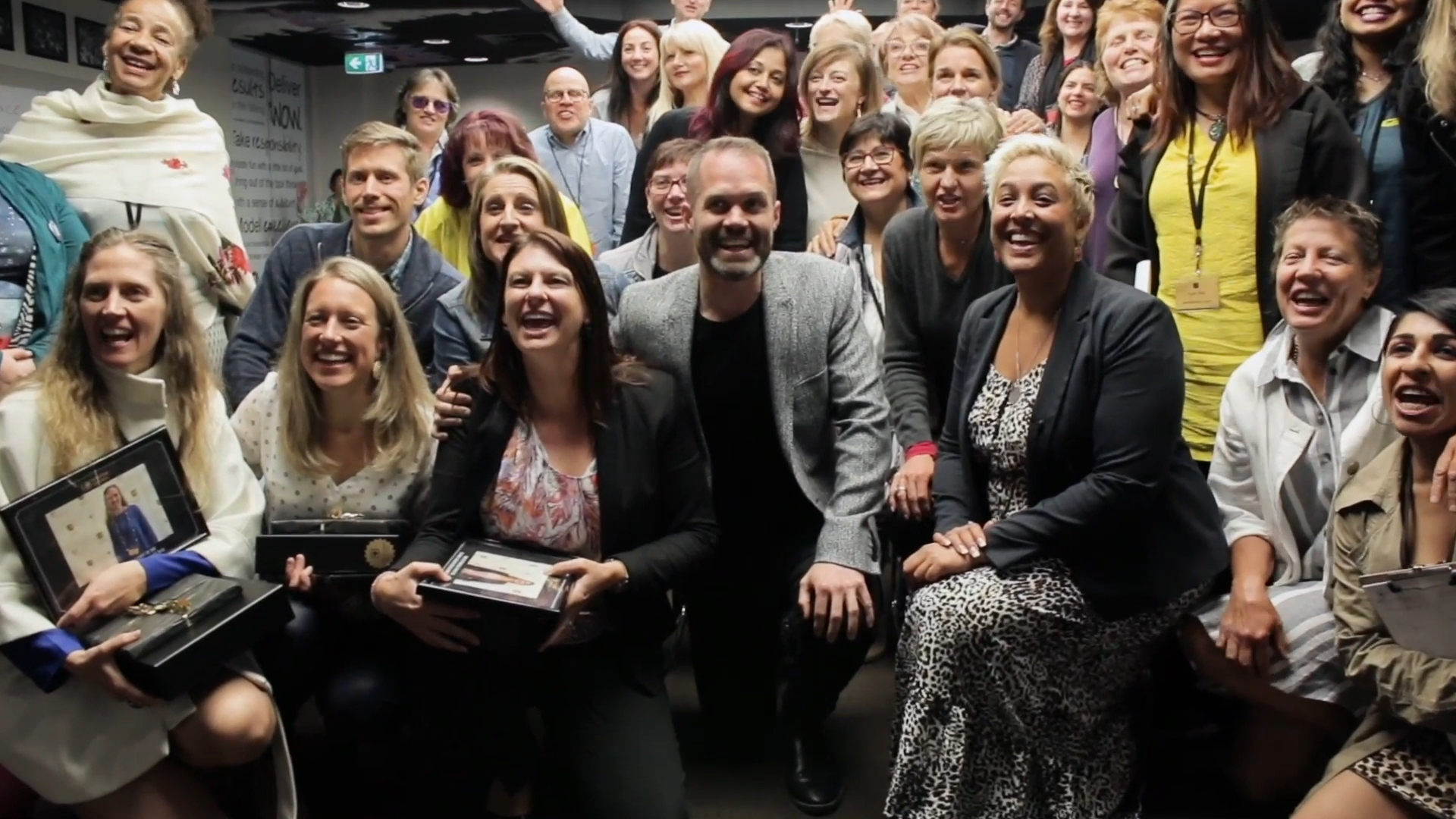
Melbourne Intake in December – congratulations!

A great group of coaches who reached another level of who they are! Well done!
Essential Coaching Skills for Leaders
Sharon Pearson is running an exciting two day workshop on 5th and 6th of March (9:00am - 5:30pm) at our new training facility in Albert Park! And we'd love to invite you to...
Essential Coaching Skills for Leaders
- How to coach individuals & teams in the workplace
- TACOCA Coaching Model (TCI reg)
- Feedback in the workplace
- Developing the manager as coach
This two day program will -
- Fast-track your executive and workplace coaching skills;
- Assist you in developing your leadership coaching abilities;
- Give you the language for coaching teams;
- Develop your corporate vocabulary;
- Share the language of KPI's, testing & measuring and other management tools;
- Expose you to one of the most successful coaches in Australia for two whole days!
The investment -
To the public $1,000 GST incl;
Cert IV in Life Coaching students $750;
Diploma students $495 - a must for executive coaching students committed to becoming an executive coach!
Franchisees - free
Your next step - Call us TODAY on 1800 094 927 and ask for Deanne or Liz and they will send you an enrolment form to get you started. You can find out more on our new website here.
We look forward to seeing you there...
Certificate IV in Executive and Workplace Coaching
The Coaching Institute will be launching its new Certificate IV in Executive and Workplace Coaching in 2008! We are all very excited about this new course. It’s for those people who want to incorporate coaching skills into managing their workplace. So, keep an eye out for more information on training dates and times.
For more information call us TODAY on 1800 094 927 and ask for Deanne or Liz.
Coaching Corner
NEW YEAR’S RESOLUTION WE’VE ALL HAD A FEW…
It’s that time of year again – time to road test the New Year Resolutions. Off we go, clutch engaged, engine on, tank fuel of motivation and determination, headlights on full beam pointing to where we want to get to……now where did I put that damn map? I know we’ve all done it, resolved to… you fill in the blank.
The New Year is always a great time for evaluation, reflection, goal setting and clean slates. January is peak time for new gym memberships and enrolments to weight-loss programmes. The air is alive with chants of “4 days without a cigarette” and “I’ve lost 2 kilos”. Yet all this excitement, commitment and activity can fade within a few short weeks or months of the year. So, how do you make those resolutions stick and not fizzle out 2 months later?
What is the secret to success? What can you do that will ensure that you achieve your desired outcome?
The first step is to examine what it is that you want to achieve. Are you seeking to achieve a positive outcome or seeking to avoid a negative outcome? Does your goal indicate something that you want to move towards, or something that you want to move away from?
For example; a person who wants higher income could either state that they want ‘to enjoy financial freedom’ (moving towards a positive outcome), or alternatively that they ‘don’t want to struggle financially anymore’ (moving away from a negative outcome).
In the first example the person is focused on what they want to achieve. In the second example the person is focused on what they do not want to occur. The universe will always deliver what we focus on. Setting goals in the positive, (what we want) not only increases our overall ‘chances’ of successful achievement, it also provides a nicer view in the headlights!
The second step is to consider the reality of your goal. In order to be realistic your goal must tread the fine line of being achievable and of being challenging. Imagine yourself standing at the centre of a children’s see-saw. On one side is a far-fetched outcome, on the other is an outcome you can achieve with ease. Now weight your goal so that it perfectly balances between these two alternatives. Goals which are too difficult or too easy are soon abandoned and forgotten.
Take the reality check and ensure that you can answer ‘yes’ to the following five questions;
- Is this something you REALLY want?
- Is this something you can INFLUENCE?
- Is this something you can CONTROL?
- Is this what is this is REALLY about?
- Are you doing this for YOURSELF?
The final step in setting the goal is the measurement, or the arrival point – the ‘what?’ and the ‘when?’ How will you know when you have arrived at the outcome? When will you get there? What will you be seeing, hearing and feeling that will tell you that you have arrived? Take time to actually visualise the outcome you are seeking, tapping into the sounds, thoughts and feelings as you do so.
Now that you have a clearly defined, measurable, realistic, positively stated goal, it is time to get out the street directory and work out the nitty-gritty of the roads. How are you going to get there?
This is your road map – your directions. The more effort you plan into your journey, the easier the journey will be. If you have ever headed off in the car and travelled blindly into the city with a vague idea of your destination, you will know just how much chaos those unforeseen one-way streets, no right turns and pedestrian zones can cause. At best they cause delays, at worst they involve cancelling your plans altogether. Taking time now to plan your journey will ensure that you arrive at your destination on time and by the easiest route.
In planning your journey, consider what it is that you need to do, who is involved, what obstacles might hinder you, what are the steps along the way, etc. Incorporate your answers to the following questions into your plan;
What is the first thing that you need to do?
What is one thing that you need to do every day?
Who is on your team to help you achieve this outcome?
Who do you need on your team?
What obstacles are in your way?
What will you do to overcome these obstacles?
What is missing?
What are you tolerating?
What are you not telling yourself?
What is one big step you can take?
What good experiences have you had in the past? Why were they successful?
What negative experiences have you had? What did you learn?
How and when will you review your progress?
Write your goal and your actions down and put them in a prominent place to maintain your focus. I suggest you create a vision board, this is a board where you keep anything… everything related to your ultimate vision and contemplate it often visualising every detail as if it actually exists and how you want it.
One last thing, make sure you plan now how you will celebrate achieving your goal.
We take our hat off to...
This month we would like to acknowledge, Alex Kalafatis (intake December 2006). We love that he has shown effort, persistence and resilience in helping him to become a better coach which has resulted in an increase in his business. What a fantastic example you’ve shown yourself to be. Well done!
Businesships Not Friendships
By Lisa Wiking, TCI Franchisee
There's a difference between being a friend and being a leader and knowing the difference means we can create a supportive environment for success, rather than an environment filled with frustration for everyone. Team members lose respect for anyone needing acceptance ahead of results. The line between friendship and "businesship" is what creates a high performance team.
A lack of results in business comes from poor leadership, rather than poor quality staff. The ability of staff in their role is related to the ability of the leader leading them. Staff are looking for a supportive and encouraging environment, not the highest paying job.
High staff turn over is often the result of poor leadership. A supportive, encouraging and fun environment is not the same as becoming best friends with your employees…. Far from it. It’s important to think about ‘what’s in the best interest of the business’ whilst providing that environment.
A strong Vision means you are well on the way to great leadership. It must be developed by the leader and then ‘sold’ to the team as a purpose, a reason for them to get out of bed each morning. It must be a vision that is inspiring to all involved, not just a bonus for the boss at the end of the year. It can be as simple as an agreed incentive for the team, which then can be talked and laughed about along the way. Or it can be as complex as having a positive impact on the environment – saving our planet. It simply depends on what your team is looking to achieve and what floats their boat.
Once you have the vision, you must constantly talk about it and focus on it. There are three key points about the vision to ensure your team have buy-in.
1) Each team member must have a clear understanding of what is expected of them. Do your employees know what is expected of them, when was the last time you asked them? This is simple to rectify, plan a meeting and communicate it.
2) Each team member must know what they can expect from their team mates and their leader. It demonstrates to them that they are on an even playing field; they are as important and valuable to the team as each other. It also tells them that they have a leader who is willing to lead by example.
3) Understanding how their role impacts the vision or the bigger picture, meets the need of significance for each individual - one of the 6 core human needs. On some level each role in a business is important to the bigger vision, even the cleaner
Once the above is achieved, it’s time for ACTION!!! This part of Leadership, I liken to parenting. It’s a simple analogy. If you’re not a parent, think about a child you know, a nephew or friends child. If you were raising a child, are you their best friend? Do you do everything they want, when ever they want and how they want? Do you give them anything they want or say yes just so they like you? Hopefully a good guardian would say NO (Grand parents can say yes). On the other hand, do you constantly talk down to them, talk behind their back, say NO to everything just because it wasn’t your idea, reprimand constantly and never reward, expect them to give their whole life, and not give anything in return? Also, hopefully a good guardian would say NO. It’s necessary to strike a balance between the two and treat your employees like a guardian would treat a child. Creating a supportive and encouraging environment, where its safe to try new things, and ok to make mistakes, where if there is something they want to do, and it doesn’t impact the running of the business then say ‘yes’, and save ‘no’ for the big things that do impact the running of the business. Allow them to speak their opinion and have it heard without reprimand or mocking. Allow them to make a mistake, so long as they learn from it, so they know how not to do it next time. Allow them to have fun in an environment that is happy and invites open communication. It’s about developing them to be the best they can be, through supporting, encouragement, teaching and guiding them. Imagine how successful businesses would be if they all adopted this philosophy. The success of each business would be unimaginable. So next time as a leader, you have interaction with your team, stop and ask yourself, is this how you would treat your child, nephew, or
friend’s child?
For more information please feel free to contact Lisa Wiking on
0408 711 769 or click to email.
***BONUS TELECLASS***
Are you new to coaching?
Are you confident coaching is your dream career, yet feel it's a challenge to learn and piece it all together?
Have you completed your intake weekend and now struggle to find the confidence to get clients?
Or are you simply looking for a structure to work within.....?
Then allow Lisa Wiking to walk you through the 'Foundations and Structure of a Great Coaching session'
Lisa Wiking is a franchisee of The Coaching Institute, and has been for just under 2 years. Throughout her journey she has had great successes as well as the bumps and knocks, that you can typically experience as a new coach. She has done numerous live demonstrations of coaching both at the 'intake weekend' and on the 'Live Coaching' Teleclasses. For the past 12 months she has been a Coach Mentor for TCI's new coaches and found that the information that she was sharing was valuable to every coach on the call, regardless of whether they were the coach the client or the listener. She was receiving requests constantly to be a mentor via referral. As her business grew, she couldn't keep up with the demand, so rather than keeping this valuable information to a limited few, she has now written a 'bonus' teleclass for 'TCI' coaches only to participate in during the month of February. Lisa invites you on to participate in one of these teleclasses, and then she will open it up to answer any questions you may have.
When: Saturday 2nd February, Saturday 9th February and Saturday 23rd February. Time: 11.00 am. Investment: $20.00
RSVP: click to email Lisa with credit card number and expiry date or phone Lisa on 0408 711 769.
Once you have RSVP'd you will receive an email with the phone number and the pin code for the call.
Choice
By Richard Mailer, TCI Franchisee
Throughout the last month it has really struck me that how satisfied, fulfilled and happy we are in our lives is determined by the degree of choice we perceive we have in our life. This may be choice in what we do, how we feel, what the future holds, or who we relate to. Helping us develop a better quality of life can therefore largely centre around increasing the number of choices we have in each aspect of our lives.
Choice can mean having options about the things we do. However having choice regarding how we feel and what events mean to us, can have even more impact.
I know myself at home with three kids, including 4 yr old twin girls, it can seem that everyone is conspiring to throw life into turmoil. It can be an emotional roller coaster, as different needs and wants are expressed (often in many colourful ways!). My ability to choose how I respond to the circumstances has made a huge difference to the quality of life for my family and me. Being able to weather the storm of a double tantrum, without allowing the emotion to dominate my decisions, has been a Godsend.
I was brought up like many other people, in an environment where how you felt was just that, how you felt. People were seen as causing others to feel certain ways, and there wasn’t any perceived choice about how we felt. Understanding that I do have choice as to how I feel at any point in time has allowed me to be more resourceful, and relate much better with others.
Previously I said the quality of our lives depended on our Perceived choices, not our actual choices. This is due to a large part of the personal development journey being about becoming aware of the choices we already have, which we may have not recognised before. I’m sure we’ve all said, “why did they have to make me feel this way?”, or “If only they would do that, then I would be happy”. Becoming aware of choices we already have is the first stage of increasing choice, and can often have significant and rapid benefits.
In recognising the choices we already have, there are two key realisations.
i) That there is a gap between events that happen (stimulus) and the way we respond (Response).
ii) In that gap we have an ability to make a choice as to how we respond.
i) It is so easy to fall into the pattern of assuming that the way we respond is automatic and we have no say. We often have patterns of reacting in certain ways and being drawn into the emotion of the situation, or a habitual behaviour that has been centred around keeping us safe, rather than getting us what we want. However there is a gap, even though it can seem non-existent at times. It is present, and as we become more aware of it, the bigger it becomes.
ii) Once we know there is a gap, we need to use the gap and choose our response. Now I would be the first to admit this is not always easy, and at times I still get hooked by the emotion of the situation (kids really know how to push the right buttons – especially when it involves play-dough and carpet, or textas and walls). However, I catch myself earlier and earlier each time, and remind myself that no one can make me feel anything, unless I choose to let them. A large part of choosing our response is to choose how we are feeling, or our emotional state. Our ability to choose our state at any time, gives us an incredible power to influence the results we get from every situation. Reminding myself that I choose the way I am feeling rather than a 4 yr old, is always a sobering thought.
Apart from the way we feel, it is also important to recognising that we have a choice as to the meaning we place on the events that happen. The key here is not whether the meaning you give the events is right or wrong, rather whether it will give you the outcome you want.
These realisations are tremendously powerful, and can have an incredible effect on how we perceive the world, and the choices we have as to how we respond and act. With this comes such responsibility, as we can no longer blame others for what we now know is in our control, and can no longer use external circumstance as a reason for us not achieving the results and life we desire. However there is a fundamental empowerment that we do gain from this which allows us to take back control of our lives and be the crafters of our future, not the victims of circumstance. What will you choose ???????????????
Remember - THE GAP
References: Stephen Covey – 7 Habits of Highly Effective People.
What’s Your River?
By Joe Pane, TCI Franchisee
The late Earl Nightingale once said that there are two types of people in the world. There are goal setters and there are river people. River people are those people who are born into their craft and excel to amazing levels in comparison to the rest of the planet. Examples of this are people like Tiger Woods, Don Bradman and Roger Federer. River people. These people began their journey into their prospective sports from a very young age. They worked hard. They persisted. Earl Nightingale believed that these people make up 1 in 10 000. The rest are goal setters. In other words they need to set goals and work toward achieving them. Setting goals means writing them down and looking at them with emotional intensity at least weekly. If the goals are in your head – they are not goals!
Now lets take what good old Earl says and take it to the next level. What if there is a river within all of us? All we have to do is notice it. So how do we notice our river? We notice it by what we love doing which leads to what we are good at. This in turn leads to identifying our strengths. Take notice of what people encourage you to do. These are subtle clues that may lead you to discover your river, your love, your purpose.
There are many who believe that we need to work on our weaknesses. This is an urban myth. There was a classic late football commentator whose name is Jack Dyer and he would refer to average football players as very good ordinary players. If we work on our weaknesses and only our weaknesses we will only ever be very good and ordinary. Working on our strengths is an entirely different story. When you work on something that you are already naturally good at, that you love, that is your river, you will excel at an amazing rate well and truly above being very good and ordinary. As a result a huge gap will develop between you and the rest of the majority of the population in that area of strength. It is in that gap that people will pay you and pay you well simply because you are so great at what you do. To get real good at your weaknesses you will only be as good as the majority of the population. There will be no gap and you get payed like everyone else.
I believe we all have a responsibility to work toward discovering our strengths, our love, our river and then acting. This leads to you fulfilling your need to contribute which leads to growth which leads to experiencing your life in a way that feels real real good. Isn’t that the point to experiencing life, doing life, having a life ? Then you allow the space to experience level 1 courage. Level 1 courage is the courage to begin. This is followed by level 2 courage. Level 2 courage is the courage to continue – when most would stop.
Set goals that inspire you!
By Theresa LaRoque
Over the past 12 years, our work as life and business coaches has given us a front-row seat to watch the ways that people set goals and respond to them, and how they create lasting results in their lives. In the process, we stumbled onto an interesting insight: most people set uninspiring goals and spend more time struggling through life then truly enjoying it.
Nine times out of 10, people set goals that are based on what they "have to" get done or what they "should" do: lose weight, organize the files, finally get the website up and running. They take all the unpleasant things they've been avoiding, and make an agreement with themselves to push through and finally get them done. "Push through" is key phrase here - it's the feeling behind most goals. No wonder we don't tend to keep our resolutions!
If you're ready to generate results in the easiest, most engaging way possible, it's time to take a fresh look at the entire concept of goals and resolutions. Instead of resolving to get the dirty work done, how about resolving to live a more enjoyable and fulfilling life?
What if you set goals that naturally inspired you? What if the very idea of your resolutions made you want to take action on them? What if you chose goals that excited you, ones that lit you up on the inside?
The key is to set goals that correspond with your personal values - the things are most important to you. Goals based on your values are the easiest and most rewarding ones to achieve. Why? Because you don't have to "push through" them. You want to do them. They make you reach higher, move faster, and engage more of yourself - and they feel good!
So, how do you determine which goals align with your values? First you have to get clear on what your values are.
Your values are the intangible aspects of life that make you feel in alignment, complete, on track, and functioning at a high level. Some examples include adventure, fun, service, creativity, connection... there are hundreds out there. A life (or goal) that aligns with one's core values will feel satisfying, even in difficult times.
Because this topic of values can be a little confusing, let's make a distinction between "means values" and "end values." Means values are a way to get to end values. For example, I often have clients tell me they value family; but with a little further exploration, we discover that the underlying value (which extends beyond family) is really connection, belonging, or community. Family is one way to experience what they truly value in life (means to an end).
When you set goals to experience more of what you value most, life gets immeasurably richer - and easier! If you value adventure, and you want to lose 10 kilos, don't vow to be at the gym every morning - get out and do something adventurous! If you value connection, and you want to make more money this year, find a job that pays more when you develop relationships. Let your values lead you forward toward the life you really want, and make this year your best one yet.
As you go through the month, think about how you would complete this sentence:
If I had plenty of free time and all the money I could ever want, then I would be free to (action) and that would let me experience more (value).
Do this exercise over and over to help you identify the aspects of life that you value most. Keep track of your answers... they're the roadmap to your ideal life!
Get yourself a journal and start moving!
Enrolling with The Coaching Institute
We would love to conspire for your success – you bring the desire, we’ll bring the training! As part of your Certificate IV in Life Coaching training with The Coaching Institute, you now receive –
- Your pre-learning pack
- Intake Weekend face-to-face training
- Intake Mentor to work with your class throughout your training
- Orientation class with the National Support Manager
- Teleclasses on advanced skills
- Live Coaching Demonstrations
- Professional Development Classes
- Coaching Ethics training
- TCI/ICF Core Competencies classes
- Your own Mentor Coach
- Group Mentoring
- Access to the Member’s Only Website
- Access to the Coaching Forums
- Practice Sessions with other coaches
- Complete assessment for your accreditation
- Fulltime support from an Accredited TCI Coach
- Four different membership options upon graduation
- Graduate network
To enrol, you can download your enrolment form by clicking here,
or contact your Course Consultants Deanne Mathews or Liz Tyrrell TODAY on 1800 094 927.
The journey all starts with one step.. discover your true potential by becoming a member of the leading coaching institute in Australia.
|